Your family’s growing or your eldest son’s leaving the nest, and you’ve decided to move…
How to improve a home’s energy efficiency ?
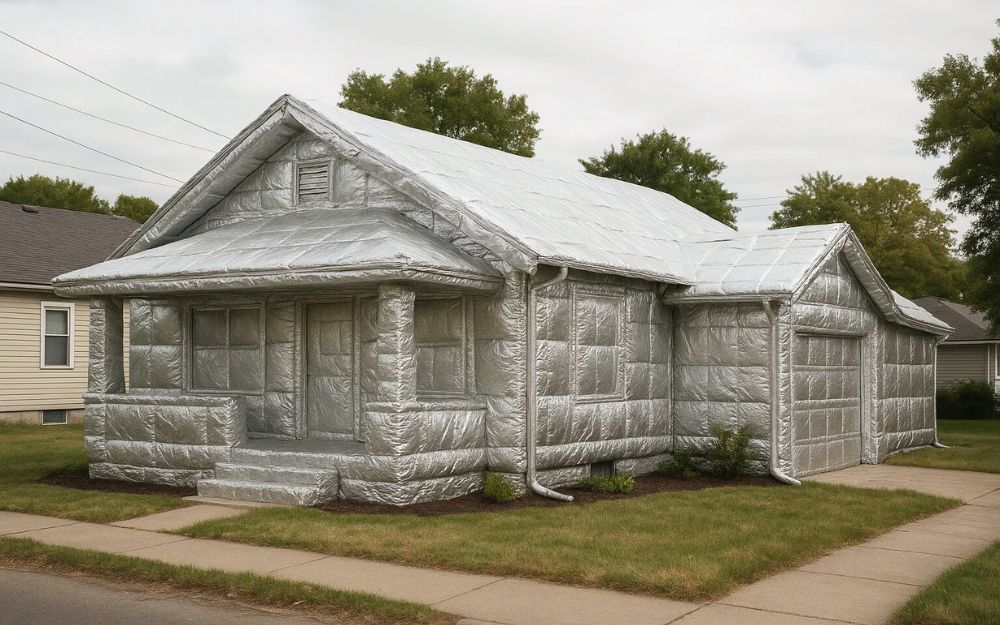
A building’s airtightness plays a central role in its overall energy performance. By reducing uncontrolled air infiltration, it helps maintain stable indoor temperatures, lowers the load on heating and cooling systems, and ultimately leads to substantial energy savings. But is it the only — or even the best — way to achieve this? Stay with us as we explore the various ways to boost a home’s energy efficiency.
Looking to improve a home’s energy efficiency?
Ours energy efficiency advisors are there to
help you get the most out of your energy bills!
When a building lacks proper airtightness, air leaks can occur around doors, windows, electrical outlets, ducts, or at the junctions between walls and the roof. These thermal losses force mechanical systems to compensate, increasing energy consumption and associated costs.
Improving airtightness often begins with a blower door test, which helps identify weaknesses in the building envelope. Air leaks are then sealed using materials such as weatherstripping, caulking, air-barrier membranes, or expanding foam. Although relatively simple and affordable, these interventions can significantly improve a building’s energy performance.
However, airtightness is only one piece of the puzzle. To maximize a home’s energy efficiency, several complementary measures are essential:
1. Thermal insulation
Proper airtightness must be paired with adequate insulation. Insulating the attic, walls, and floors reduces heat transfer between the interior and exterior. High-performance materials such as cellulose, mineral wool, or polyurethane panels increase the thermal resistance of the building envelope. A well-insulated home retains heat in winter and stays cool in summer, reducing the need for heating or air conditioning.
2. Window replacement
Windows are often responsible for significant heat loss. Installing double- or triple-glazed units with inert gas fills and Low-E coatings greatly improves thermal performance. Frames made from insulating materials (such as PVC or wood) also enhance efficiency.
3. Heating and cooling systems
A home’s overall efficiency also depends on its mechanical systems. Replacing an older system with a high-efficiency heat pump allows for heating and cooling with far less energy. Modern systems tend to be more efficient, quieter, and equipped with smart technology.
4. Controlled ventilation
An airtight building requires a mechanical ventilation system, such as a heat recovery ventilator (HRV). This device ensures a healthy air exchange while preserving the energy already accumulated indoors. It improves both indoor air quality and comfort while minimizing energy losses.
5. Lighting and electrical appliances
Finally, switching to LED lighting, ENERGY STAR-certified appliances, and smart energy-management tools such as programmable timers and thermostats helps reduce overall energy demand.
In summary, improving a building’s airtightness is a crucial first step toward enhancing energy efficiency. Combined with other energy-saving measures, it not only reduces utility bills but also increases comfort and extends the building’s durability. If you’re considering energy-efficiency upgrades, contact us. As impartial advisors, our energy-efficiency specialists are here to help you get the most out of your improvements—now and for years to come!
Looking to improve a home’s energy efficiency?
Ours energy efficiency advisors are there to
help you get the most out of your energy bills!
Related Posts