You're comfortably working from home when someone knocks on your door. Upon opening it, a…
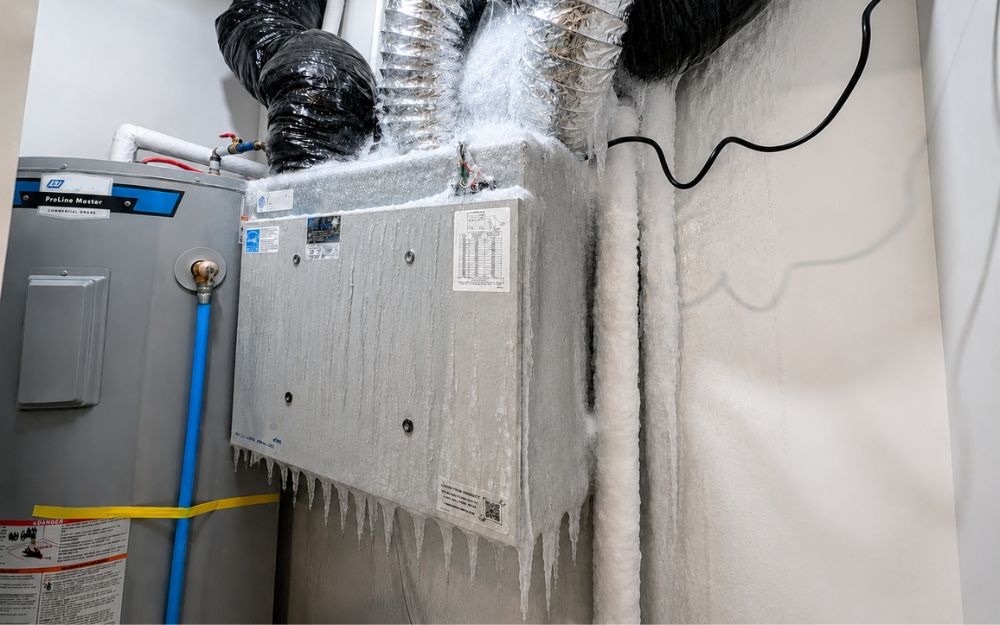
3 common problems with a heat recovery ventilator
A heat recovery ventilator (HRV) is essential for ensuring good air quality and optimal comfort in modern homes. By renewing indoor air while limiting heat loss, it contributes directly to the health of occupants and of the building itself. However, when it is poorly maintained, defective, or improperly balanced, it can quickly become a source of significant problems. To better understand these situations and know what to watch for, stay with us as we walk you through 3 common problems affecting HRVs.
Need help with you heat recovery ventilator?
Ours energy efficiency advisors are there to
help you get the most out of your energy bills!
A heat recovery ventilator (HRV) is a mechanical ventilation system that exchanges air between the inside and the outside. The principle is simple: it extracts a quantity of “stale,” humid air from the home and, in exchange, brings in fresh, dry air from outside. Since the air exchange takes place within the same unit, a core allows heat to be recovered between the two air streams. This process maintains good indoor air quality without significant energy loss.
Despite this relatively simple concept, problems can still arise:
1. Unexplained energy overconsumption
One of the most common problems with HRVs involves unexplained increases in the electricity bill. In this scenario, the unit runs continuously at full capacity, even when this isn’t required based on the building’s actual needs or the season. Worse still, some units keep running despite being set to “off” mode, due to a wiring issue, a faulty control, or an improper configuration. This overuse leads to a significant loss of energy efficiency and additional costs for occupants, often without them identifying the cause.
2. Improper operation
An HRV can also develop operating anomalies that directly harm its efficiency. For example, a unit that remains permanently in “air exchange” mode (meaning continuous exchange between indoors and outdoors) even when it is programmed for recirculation, throws off the system’s balance. This can cause thermal discomfort (e.g., constant cold drafts), excessive drying of the air in winter, a higher heating bill (again..!), and ultimately premature wear on the unit. These issues are sometimes linked to defective or improperly installed components, incorrect calibration, or simply a lack of understanding of how the unit works among occupants or building managers.
3. Poor indoor air quality
A particularly critical problem that can occur is a real lack of fresh air intake despite an HRV that appears to be working — at least on the surface. In these situations, the system seems to be operating normally, when in reality airflow is significantly compromised. Clogged filters can block airflow, while outdoor air intakes can become obstructed by pollen, dust, or other debris. In addition, the intake and exhaust dampers — though essential to proper operation — can become stuck, misaligned, or fully closed. The result: little fresh air enters the building, which can lead to higher humidity levels and a gradual decline in indoor air quality, sometimes without occupants even noticing.
These three problems have one thing in common: they are often invisible to the naked eye, but their effects are very real. Reduced air quality, discomfort, energy overconsumption, premature equipment wear… the consequences can be significant over the medium to long term.
Proper inspection and maintenance of your system can prevent most of these situations and ensure your HRV runs optimally. If you have any doubts about your heat recovery ventilator, contact us.
Need help with you heat recovery ventilator?
Ours energy efficiency advisors are there to
help you get the most out of your energy bills!
Related Posts